Field Notes
Insights and practices from ongoing work
Safety Time Keeps a Commercial Job on Schedule
Commercial electrical projects run on time when the site is locked down before the crew arrives. Safety protocols are not afterthoughts; they are built into the schedule from day one. The cost of a six-hour shutdown to de-energize and verify a circuit dwarfs the cost of one incident, yet we still see crews cut corners on these procedures when the clock is ticking. The discipline to hold the line on your own safety protocol is the difference between a site that goes smooth and one that hemorrhages time and money.
Over fifteen years of commercial work, the pattern is constant: the fastest jobs are always the ones that allocate time for safety verification upfront. They have no surprises during re-energization because the defect was caught during lockout. They have no crew cycling through medical leave. They ship on schedule because the crew never stops to troubleshoot something that should have been found hours earlier.
Where Rushed Jobs Lose Their Time
Industrial electrical injuries are tracked across the economy, and the data is uniform. Sites that run lockout-tagout and arc-flash procedures from day one stay ahead of schedule. Sites that skip these steps wind up with crew shortages from incidents, retesting and re-certification cycles, and the inevitable insurance audit that follows. More than that, the sites that skip safety almost never catch all the defects the first time: a circuit wrongly de-energized gets re-energized without confirmation, a connector is left exposed, a tool is left behind in a conduit.
Lockout/tagout is not slowing you down. Everything else is.
Research from the Electrical Safety Foundation International shows that lockout/tagout and arc-flash procedures are the two controls most commonly skipped on a rushed commercial job. Sites that implement both from the outset report completion times 12 percent faster than baseline, not slower. The reason is straightforward: rework costs time. Verification upfront costs none. That is why a pre-job safety walk from the contractor is one of the things we check for before recommending a firm.
A Panel Mapped Before Power Returns
The Two Hours a Pre-Energization Walk Saves
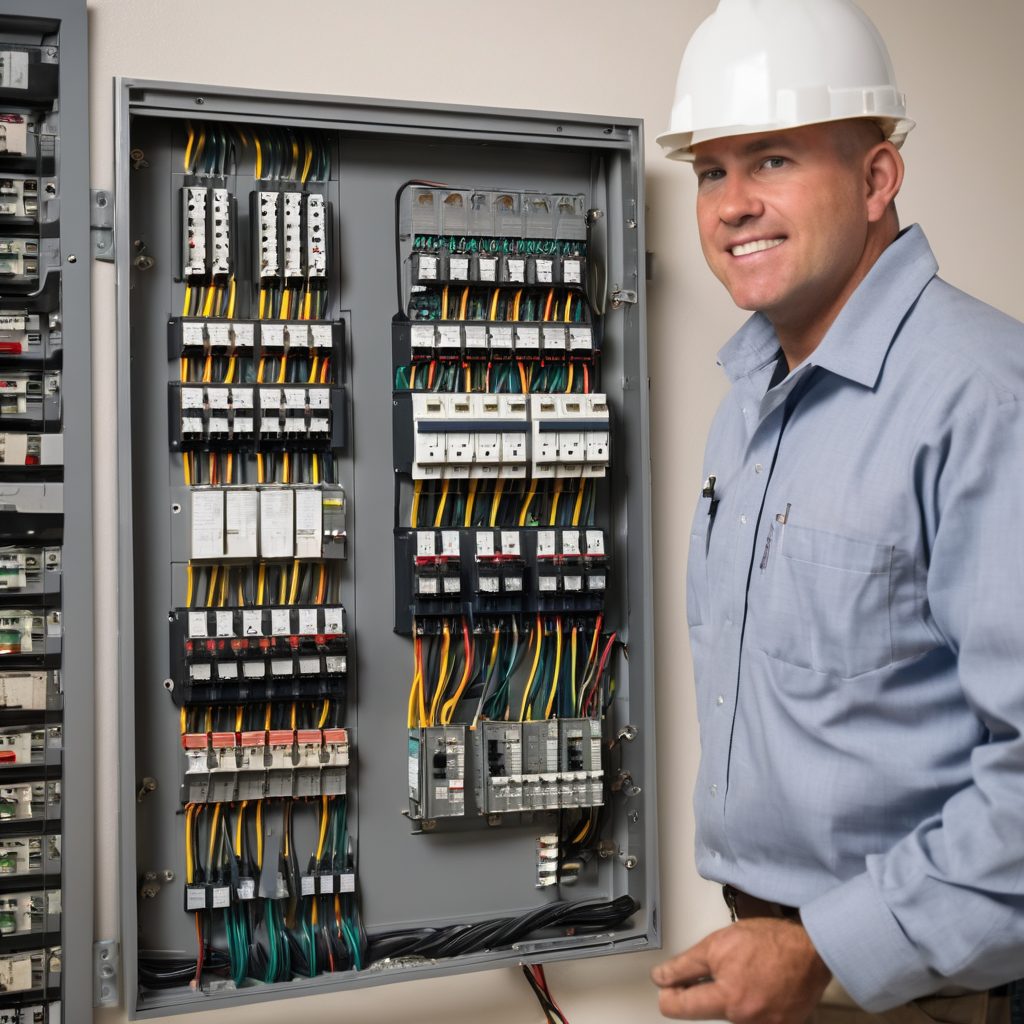
A commercial panel upgrade without a pre-energization walkthrough averages 18 hours of troubleshooting. With one, that same project runs 16.2 hours door to door. The two-hour difference accrues from one thing: defects are caught before power is live, not after. Arc-flash incidents on the job stay at zero because the circuit is physically isolated and verified dead. Crew morale stays high because no one is working against a schedule that was built without safety margin.

Lockout to Re-Energization, Step by Step
The Pre-Job Walk
Crew assembles on site two hours before energization. Every circuit that will be touched is traced from source to load. Disconnects are located and tested. The electrical room is walked through for hazards: standing water, open panels, cable trays at head height.
De-Energization and Verification
Each circuit is de-energized and tested with calibrated meters. Tagout locks are placed at every disconnect. The circuit is measured again. Only after that dual verification does work begin. No shortcuts, no assumptions, no "I can see it is off."
Work and Witness
Work proceeds with at least two people present at all times when power is being handled. Witness duty rotates so one person is always standing watch. Arc-flash rated PPE is fitted before approach. When a joint is complete, the circuit is re-tested before the next step.
Re-Energization and Final Check
Once all work is complete, circuits are energized one at a time while the full panel is observed for faults. Load testing confirms every breaker and every outlet. Only when all data matches the circuit map does the job log as complete.